The Conscious Way of Looking
In a world of instant digital capture, analog photography invites us to slow down, to see deliberately, and to create with intention. Each frame is a commitment, each exposure a conversation between light, chemistry, and time.
Photography is not about capturing what we see, but about revealing what we feel. The darkroom becomes a place of transformation, where silver halide crystals hold memories that screens can never truly convey.
Der bewusste Blick
In einer Welt der sofortigen digitalen Aufnahme lädt uns die analoge Fotografie ein, langsamer zu werden, bewusst zu sehen und mit Absicht zu gestalten. Jedes Bild ist eine Verpflichtung, jede Belichtung ein Gespräch zwischen Licht, Chemie und Zeit.
Fotografie bedeutet nicht, festzuhalten, was wir sehen, sondern zu offenbaren, was wir fühlen. Die Dunkelkammer wird zu einem Ort der Verwandlung, wo Silberhalogenidkristalle Erinnerungen bewahren, die Bildschirme niemals wirklich vermitteln können.
Visual Fragments
These minimal previews hint at the textures and moods of analog work. The full experience awaits in physical exhibitions, zines, books and prints.
Visuelle Fragmente
Diese minimalen Vorschauen deuten auf die Texturen und Stimmungen analoger Arbeit hin. Das vollständige Erlebnis erwartet Sie in physischen Ausstellungen, Zines, Büchern und Prints.
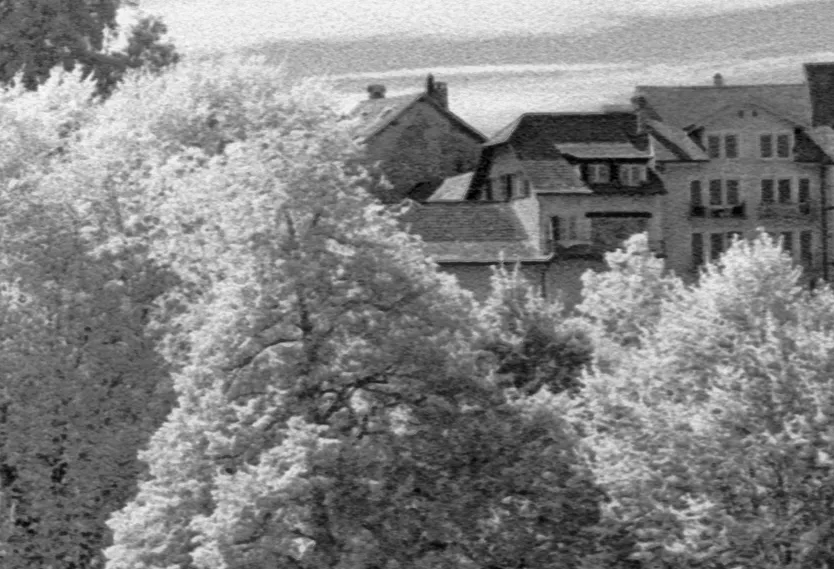
Infrared Landscape
Capturing a landscape on Rollei Infrared film, revealing the invisible spectrum
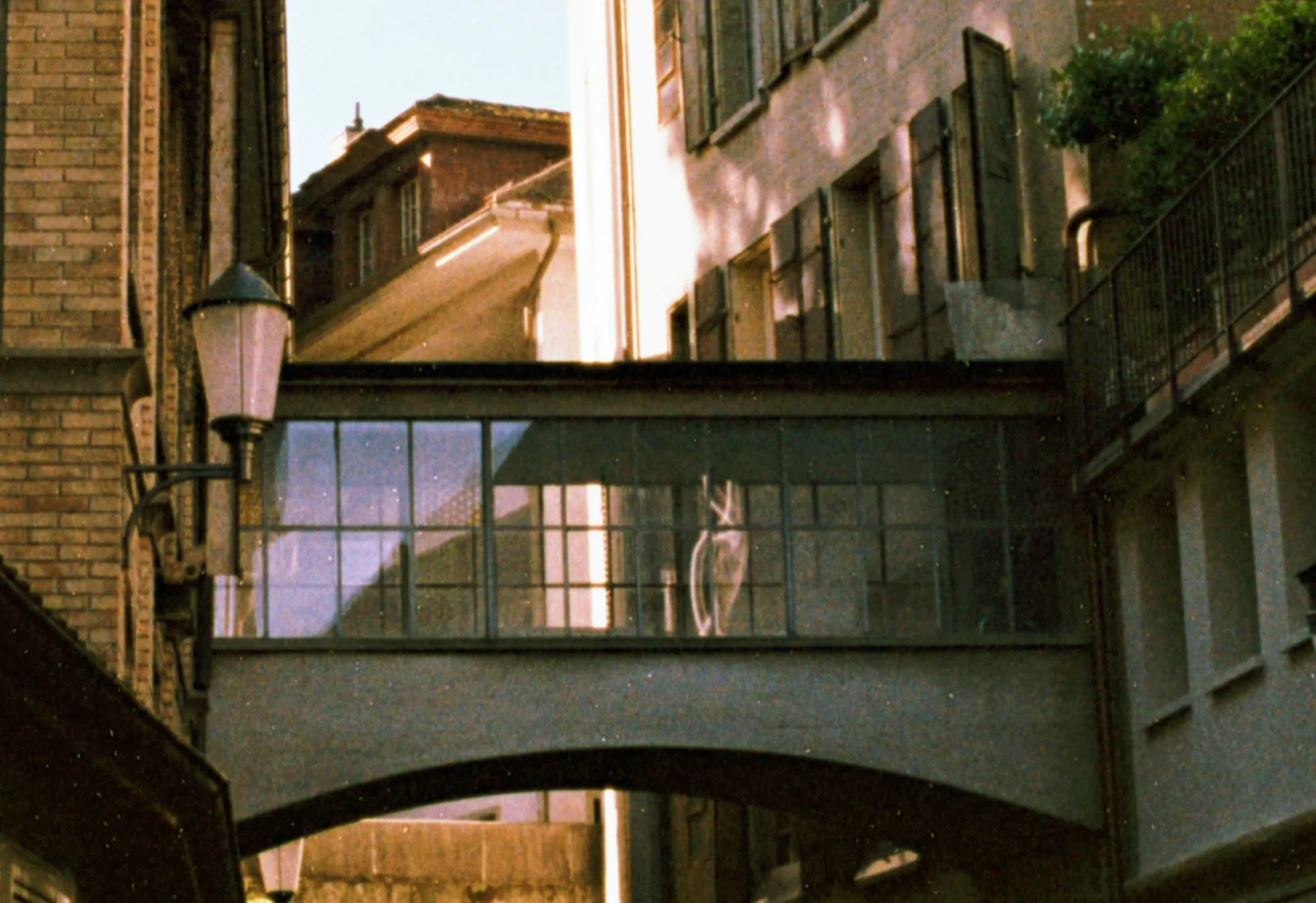
Street Fragment
Captured on Kodak Gold, revealing warm tones and decisive moments in urban life
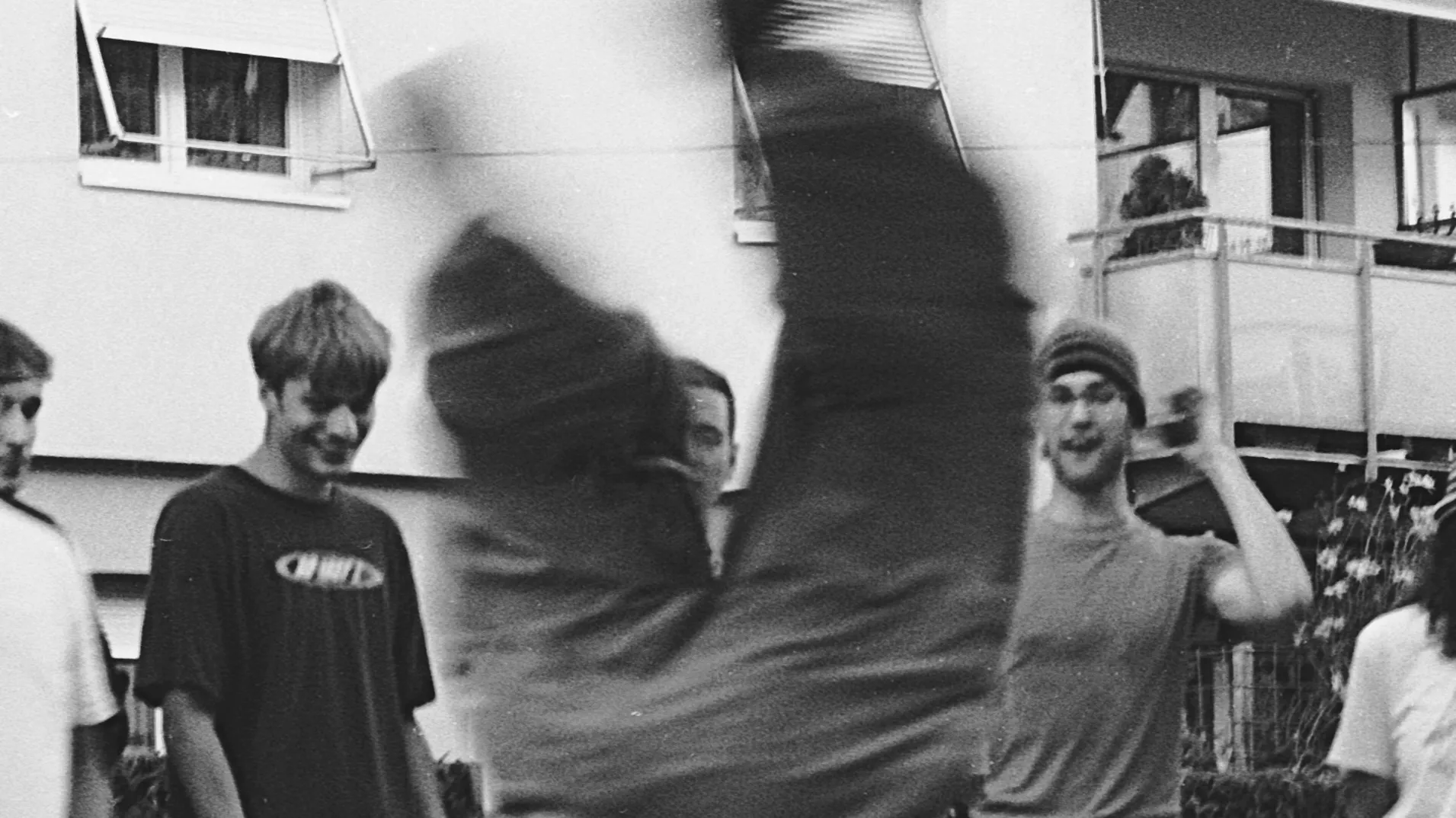
Motion and Contrast
Slow shutter speed on Ilford Ortho Plus, capturing time through high-contrast orthochromatic rendering
January Postcard '26
Januar Postkarte '26
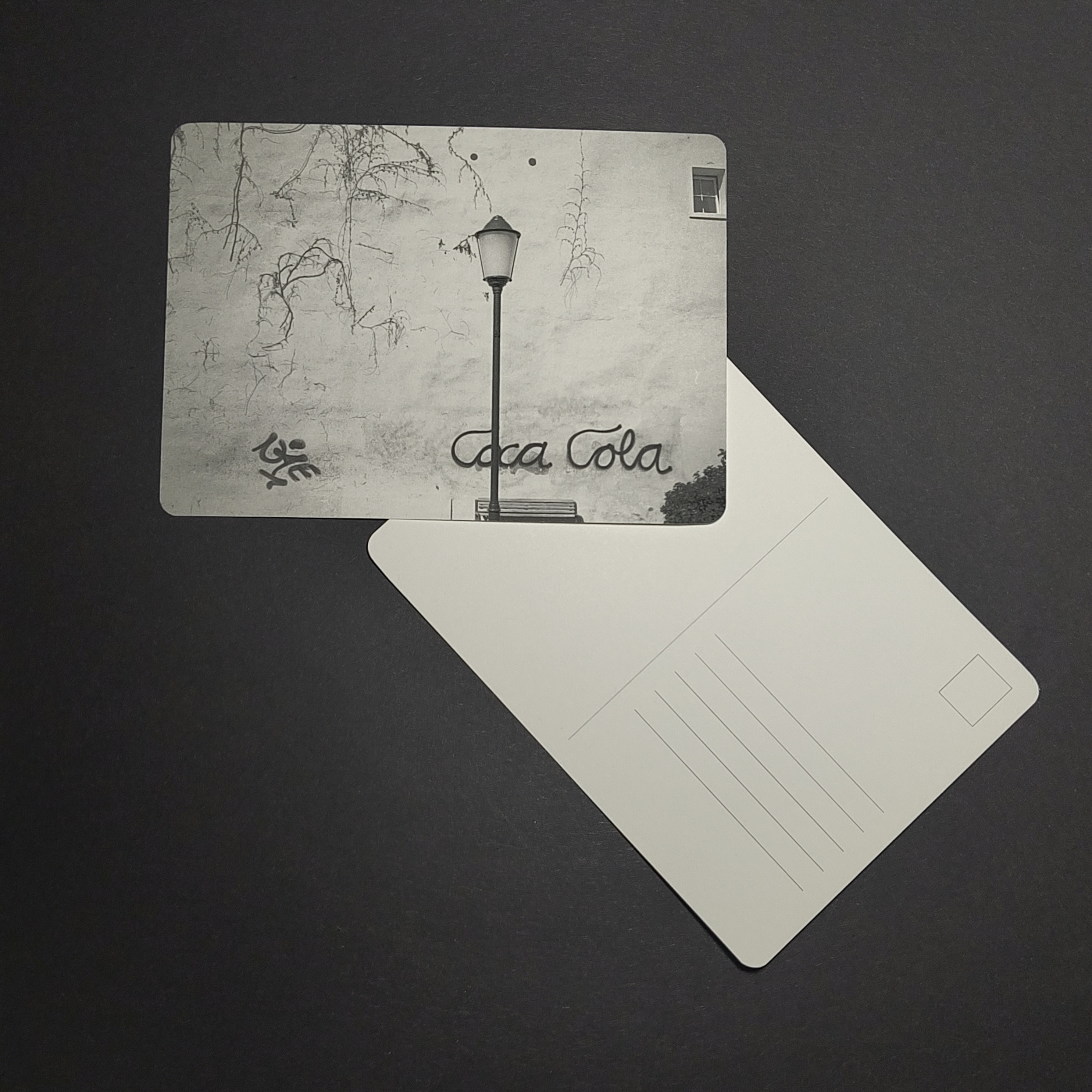
This month's postcard available on Patreon captures a hidden space in Burgdorf where a small stream runs through – a place most people pass by bike or foot without truly seeing. Located beside the Alte Schlachthaus, home to the art of Bernhard Luginbühl, this overlooked corner holds its own quiet presence.
In the rush of daily movement, these unnoticed spaces remind us of what we miss when we don't slow down. The practice of analog photography teaches us to look beyond the obvious, to find significance in the margins. Here, the flowing water and industrial architecture create a dialogue between nature and culture that exists whether we notice it or not – a perfect metaphor for the mindful observation that analog work demands.
Die Postkarte dieses Monats, erhältlich auf Patreon, zeigt einen verborgenen Ort in Burgdorf, wo ein kleiner Bach durchfliesst – ein Platz, an dem die meisten Menschen mit dem Velo oder zu Fuss vorbeigehen, ohne ihn wirklich wahrzunehmen. Neben dem Alten Schlachthaus gelegen, wo die Kunst von Bernhard Luginbühl zu Hause ist, hält diese übersehene Ecke ihre eigene stille Präsenz.
In der Hektik der täglichen Bewegung erinnern uns diese unbeachteten Räume daran, was wir verpassen, wenn wir nicht innehalten. Die Praxis der analogen Fotografie lehrt uns, über das Offensichtliche hinauszuschauen, Bedeutung in den Randzonen zu finden. Hier schafft das fliessende Wasser und die industrielle Architektur einen Dialog zwischen Natur und Kultur, der existiert, ob wir ihn bemerken oder nicht – eine perfekte Metapher für die achtsame Beobachtung, die analoge Arbeit verlangt.
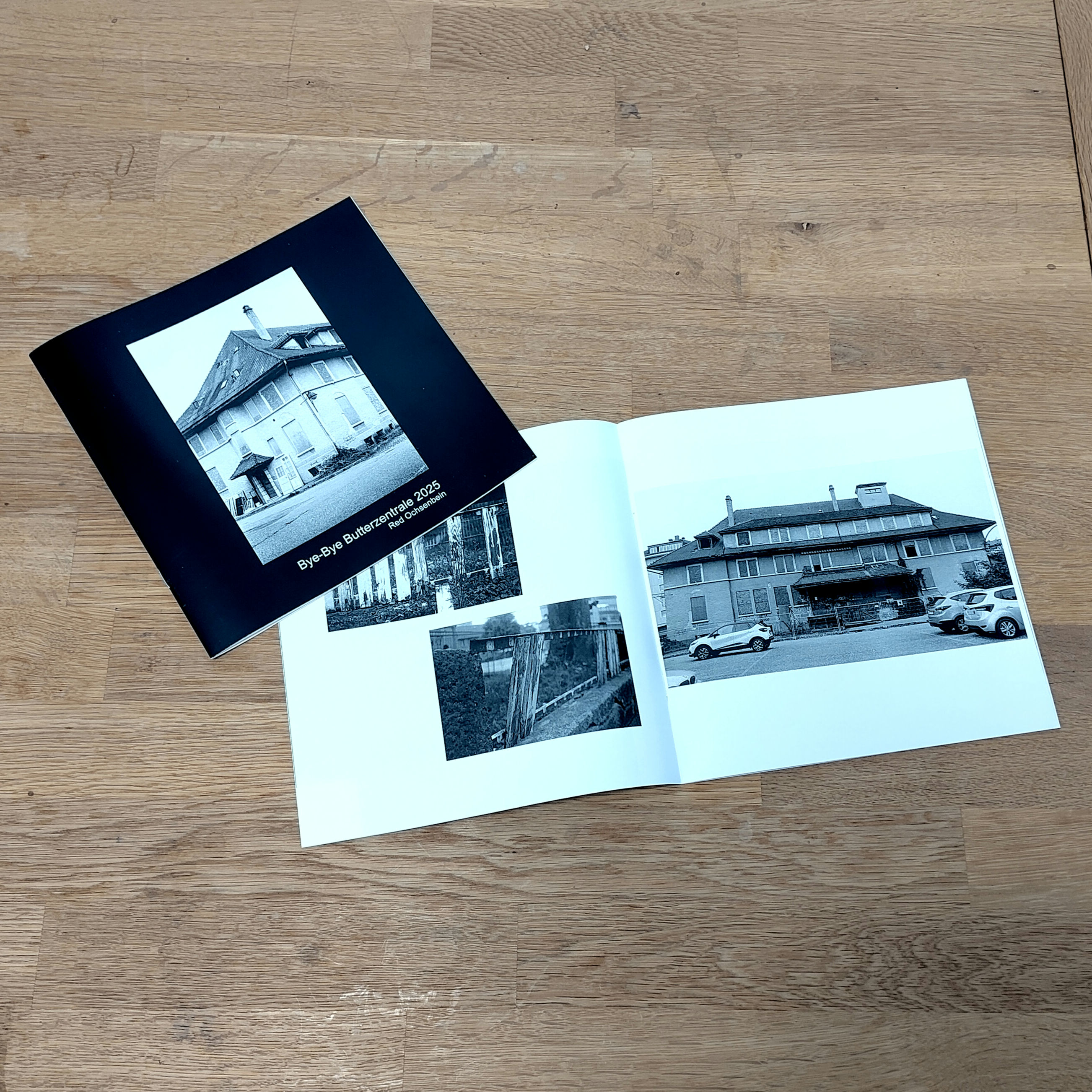
Bye Bye Butterzentrale
Bye Bye Butterzentrale
A magazine documenting the demolition of the renowned Butterzentrale in Burgdorf. Built in 1917 during World War I, the building was once the heart of the Emmental dairy industry – with cooling rooms for up to 18 wagon loads of butter. After its closure in 1973, this striking industrial monument gradually fell into disrepair.
The magazine captures the final moments of a building that is disappearing not only from the cityscape, but also taking with it the memory of an industry that made Burgdorf known far beyond the region.
Ein Magazin, das den Abbruch der bekannten Butterzentrale in Burgdorf dokumentiert. Das 1917 während des Ersten Weltkriegs erbaute Gebäude war einst das Herzstück der Emmentaler Milchwirtschaft – mit Kühlräumen für bis zu 18 Wagenladungen Butter. Nach der Stilllegung 1973 verfiel das markante Industriedenkmal zusehends.
Das Magazin hält die letzten Momente eines Gebäudes fest, das nicht nur aus dem Stadtbild verschwindet, sondern auch die Erinnerung an eine Industrie, die Burgdorf weit über die Region hinaus bekannt machte.
Why Analog?
In our hyper-connected digital age, analog photography offers something increasingly rare: intentionality. Every frame costs something - time, money, thought. This constraint becomes liberation, forcing us to see more carefully, to wait for the decisive moment, to understand light as our ancestors did.
This work exists primarily in the physical realm - in galleries, private collections, and exhibitions where viewers can experience the full tonal range and tactile quality that define analog photography. This website serves as an invitation to that real encounter.
Warum analog?
In unserem hypervernetzten digitalen Zeitalter bietet die analoge Fotografie etwas zunehmend Seltenes: Intentionalität. Jedes Bild kostet etwas – Zeit, Geld, Überlegung. Diese Einschränkung wird zur Befreiung und zwingt uns, genauer hinzusehen, auf den entscheidenden Moment zu warten und das Licht zu verstehen, wie es unsere Vorfahren taten.
Diese Arbeit existiert primär im physischen Raum – in Galerien, Privatsammlungen und Ausstellungen, wo Betrachter die volle Tonwertpalette und die taktile Qualität erleben können, die analoge Fotografie ausmachen. Diese Website dient als Einladung zu dieser realen Begegnung.