The Conscious Way of LookingDer bewusste Blick
In a world of instant digital capture, analog photography invites us to slow down, to see deliberately, and to create with intention. Each frame is a commitment, each exposure a conversation between light, chemistry, and time.In einer Welt der sofortigen digitalen Aufnahme lädt uns die analoge Fotografie ein, langsamer zu werden, bewusst zu sehen und mit Absicht zu gestalten. Jedes Bild ist eine Verpflichtung, jede Belichtung ein Gespräch zwischen Licht, Chemie und Zeit.
Photography is not about capturing what we see, but about revealing what we feel. The darkroom becomes a place of transformation, where silver halide crystals hold memories that screens can never truly convey.
Fotografie bedeutet nicht, festzuhalten, was wir sehen, sondern zu offenbaren, was wir fühlen. Die Dunkelkammer wird zu einem Ort der Verwandlung, wo Silberhalogenidkristalle Erinnerungen bewahren, die Bildschirme niemals wirklich vermitteln können.
October Postcard '26
Oktober Postkarte '26
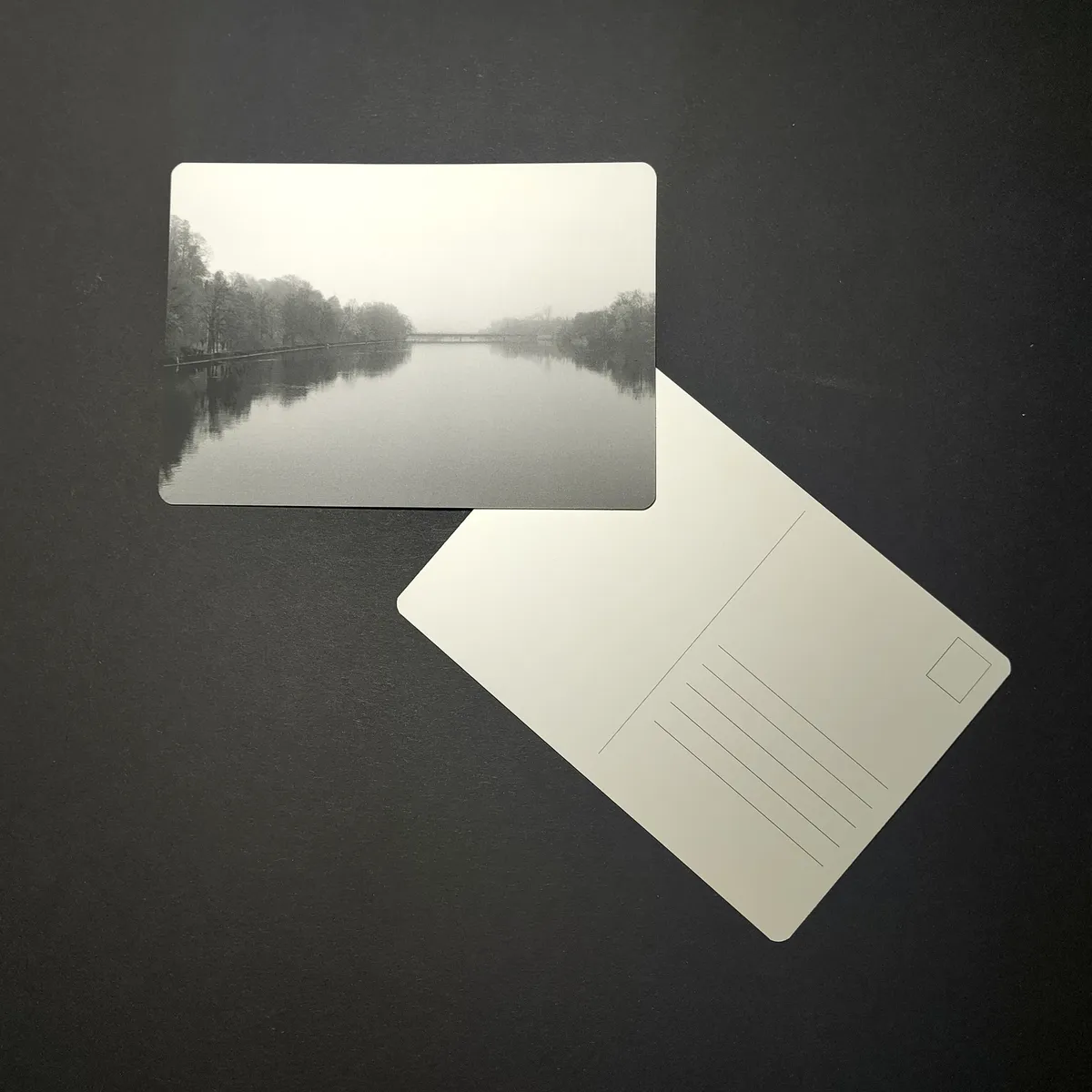
This month's postcard looks along the Aare from a bridge at Attisholz, just downstream of Solothurn. Fog has swallowed the horizon, leaving only the thin line of another bridge between the banks, while the still water mirrors the bare trees on both shores. Shot on black-and-white film, river and sky dissolve into the same soft grey.
From 1881 to 2008, Attisholz was home to Switzerland's only cellulose factory; today its grounds are becoming a new quarter for living, work and culture. Captured on a Nikkormat ELW with Ilford FP4 Plus and developed in Kodak HC-110.
Die Postkarte dieses Monats blickt von einer Brücke bei Attisholz, kurz unterhalb von Solothurn, die Aare entlang. Nebel hat den Horizont verschluckt, nur die schmale Linie einer weiteren Brücke liegt noch zwischen den Ufern, während das stille Wasser die kahlen Bäume auf beiden Seiten spiegelt. Aufgenommen auf Schwarzweissfilm, lösen sich Fluss und Himmel im selben sanften Grau auf.
Von 1881 bis 2008 stand in Attisholz die einzige Cellulosefabrik der Schweiz; heute wird das Areal zu einem neuen Quartier für Wohnen, Arbeiten und Kultur. Aufgenommen mit einer Nikkormat ELW auf Ilford FP4 Plus und entwickelt in Kodak HC-110.
Empty Places
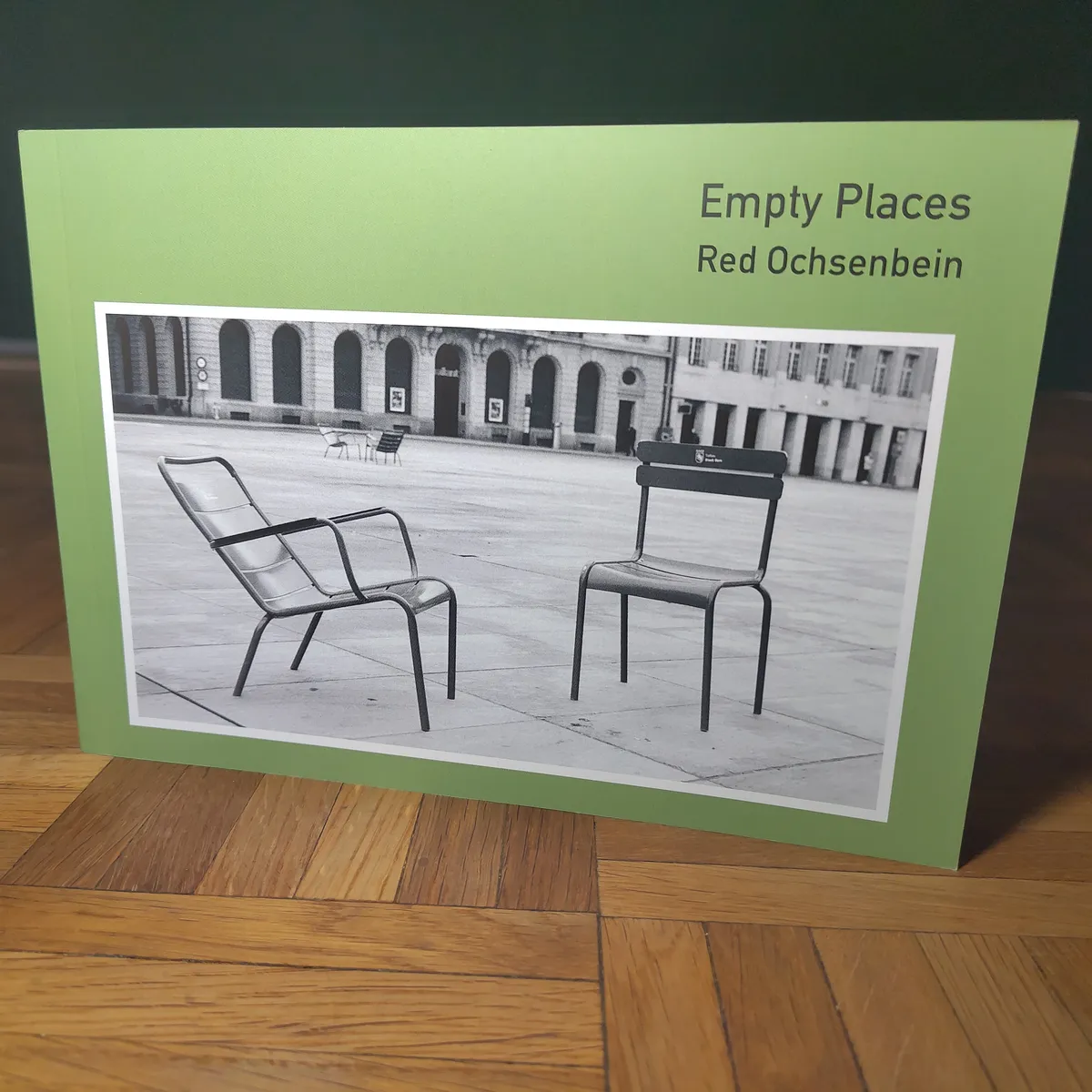
Empty Places
A chair tipped over and leaning against a table outside a closed restaurant. A bench worn smooth by years of sun and rain. A couch abandoned on a walkway, open to the sky.
This zine moves through outdoor spaces – squares, terraces, parks, streets – and lingers where people are not. Every empty seat carries a trace: of the person who just left, of the one who hasn't arrived yet, of all the quiet conversations and private moments absorbed into worn fabric and weathered wood.
Empty Places invites you to look at absence as a form of presence. To ask what loneliness looks like when no one is watching – and to wonder whether these places are truly empty at all.
Ein Stuhl, umgekippt gegen einen Tisch gelehnt, vor einem geschlossenen Restaurant. Eine Bank, von jahrelanger Sonne und Regen glattgeschliffen. Ein Sofa, verlassen auf einem Gehweg, offen dem Himmel ausgesetzt.
Dieses Zine bewegt sich durch Aussenräume – Plätze, Terrassen, Parks, Strassen – und verweilt dort, wo Menschen nicht sind. Jeder leere Sitz trägt eine Spur: von der Person, die gerade gegangen ist, von jener, die noch nicht angekommen ist, von all den stillen Gesprächen und privaten Momenten, die von verwittertem Holz und abgenutztem Stoff aufgesogen wurden.
Empty Places lädt ein, Abwesenheit als eine Form von Anwesenheit zu betrachten. Zu fragen, wie Einsamkeit aussieht, wenn niemand zuschaut – und sich zu fragen, ob diese Orte wirklich leer sind.
2025: Let there be light
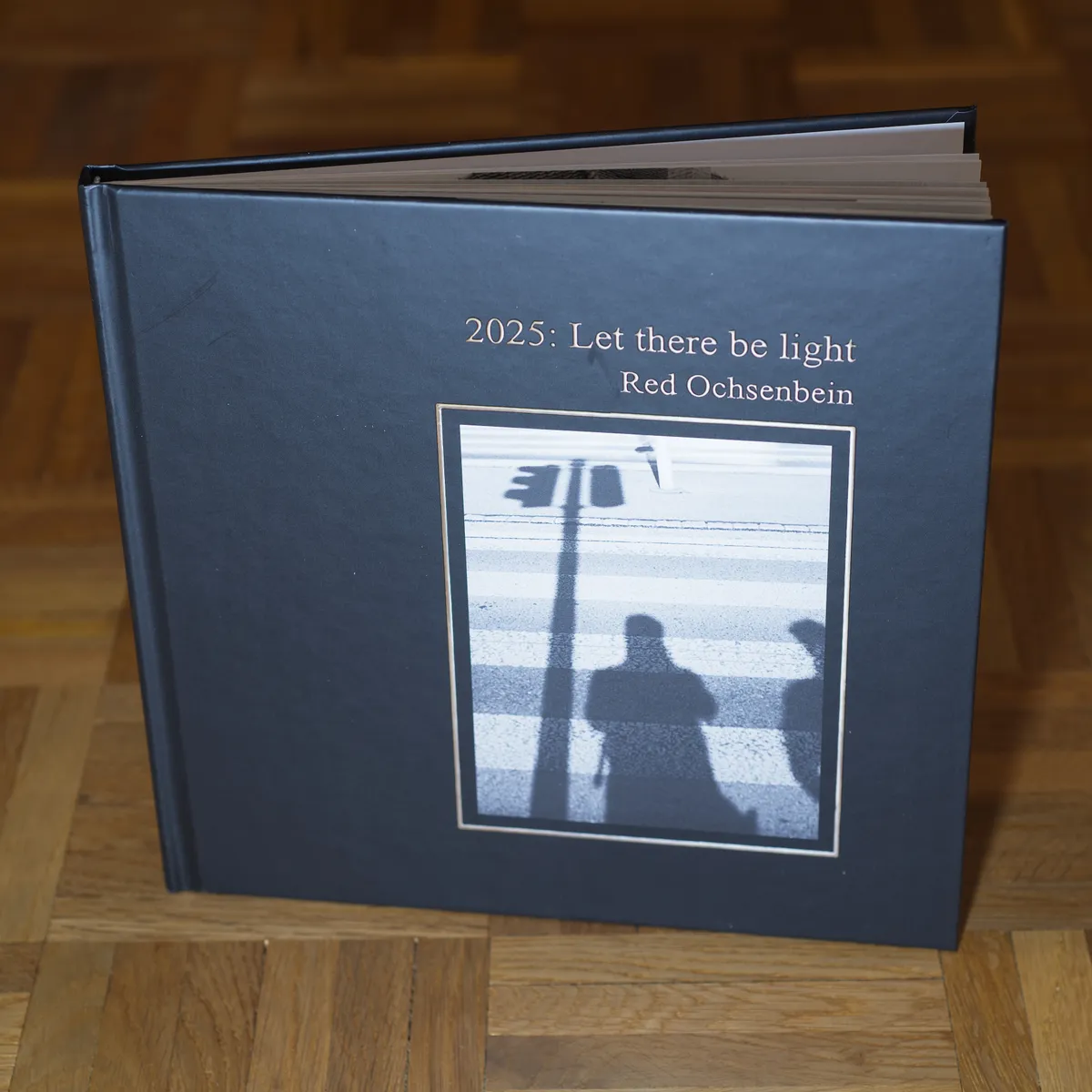
2025: Let there be light
This photobook documents the first six months of a photographic journey – from the very first shots in June 2025 to December of the same year.
This book is the testimony of a transformation: how curiosity became passion, how mistakes became insights, and how in just six months a new way of seeing developed.
Strictly limited to 20 copies.
Dieses Fotobuch dokumentiert die ersten sechs Monate einer fotografischen Reise – von den allerersten Aufnahmen im Juni 2025 bis Dezember desselben Jahres.
Dieses Buch ist das Zeugnis einer Transformation: wie aus Neugier Leidenschaft wurde, wie aus Fehlern Erkenntnisse entstanden und wie sich in nur sechs Monaten eine neue Art des Sehens entwickelte.
Streng limitiert auf 20 Exemplare.
Bye Bye Butterzentrale
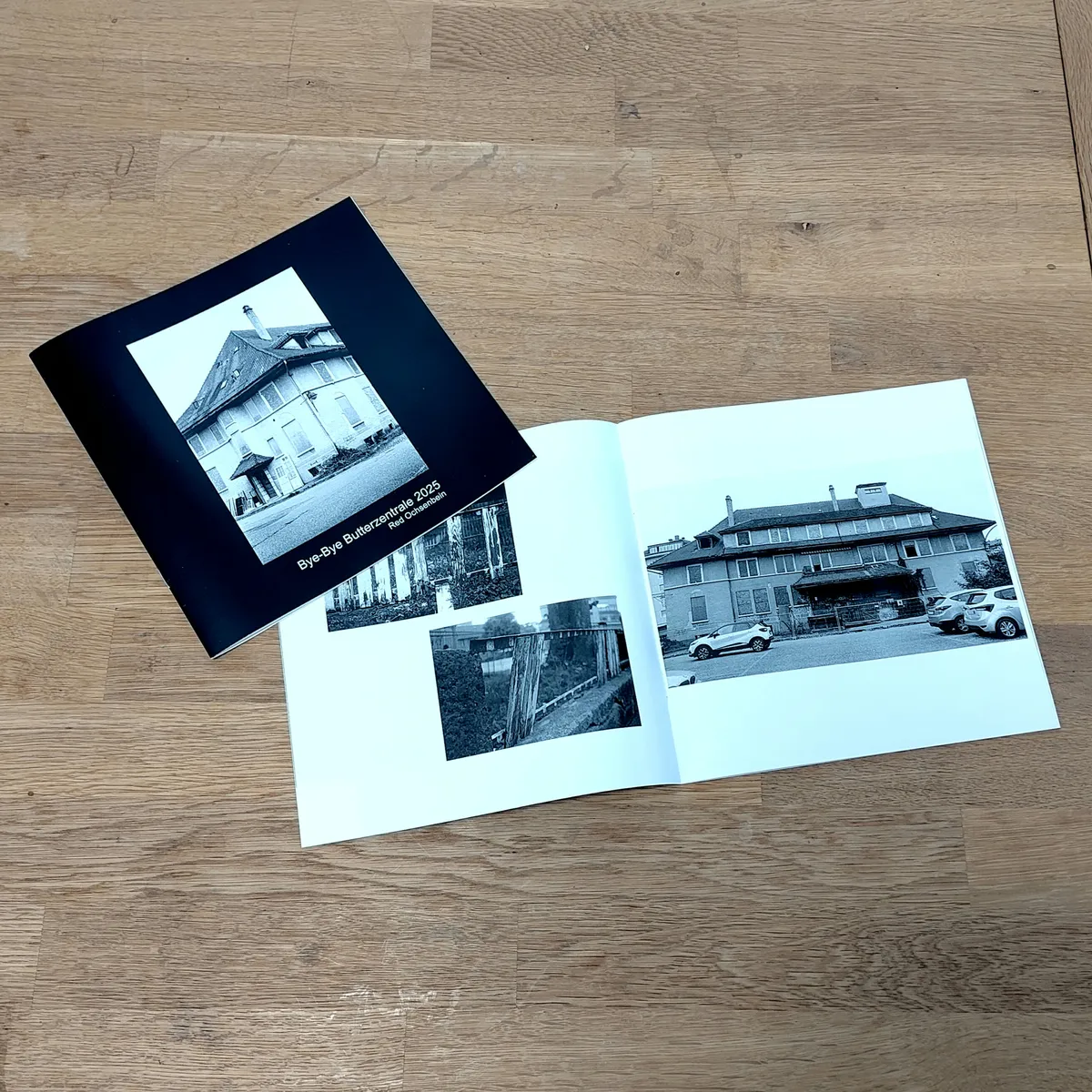
Bye Bye Butterzentrale
A magazine documenting the demolition of the renowned Butterzentrale in Burgdorf. Built in 1917 during World War I, the building was once the heart of the Emmental dairy industry – with cooling rooms for up to 18 wagon loads of butter. After its closure in 1973, this striking industrial monument gradually fell into disrepair.
The magazine captures the final moments of a building that is disappearing not only from the cityscape, but also taking with it the memory of an industry that made Burgdorf known far beyond the region.
Ein Magazin, das den Abbruch der bekannten Butterzentrale in Burgdorf dokumentiert. Das 1917 während des Ersten Weltkriegs erbaute Gebäude war einst das Herzstück der Emmentaler Milchwirtschaft – mit Kühlräumen für bis zu 18 Wagenladungen Butter. Nach der Stilllegung 1973 verfiel das markante Industriedenkmal zusehends.
Das Magazin hält die letzten Momente eines Gebäudes fest, das nicht nur aus dem Stadtbild verschwindet, sondern auch die Erinnerung an eine Industrie, die Burgdorf weit über die Region hinaus bekannt machte.
Why Analog?
In our hyper-connected digital age, analog photography offers something increasingly rare: intentionality. Every frame costs something: time, money, thought. This constraint becomes liberation, forcing us to see more carefully, to wait for the decisive moment, to understand light as our ancestors did.
This work exists primarily in the physical realm, in galleries, private collections, and exhibitions where viewers can experience the full tonal range and tactile quality that define analog photography. The digital presence is an invitation to that real encounter, not a substitute for it.
Warum analog?
In unserem hypervernetzten digitalen Zeitalter bietet die analoge Fotografie etwas zunehmend Seltenes: Intentionalität. Jedes Bild kostet etwas: Zeit, Geld, Überlegung. Diese Einschränkung wird zur Befreiung und zwingt uns, genauer hinzusehen, auf den entscheidenden Moment zu warten und das Licht zu verstehen, wie es unsere Vorfahren taten.
Diese Arbeit existiert primär im physischen Raum, in Galerien, Privatsammlungen und Ausstellungen, wo Betrachter die volle Tonwertpalette und die taktile Qualität erleben können, die analoge Fotografie ausmachen. Die digitale Präsenz ist eine Einladung zu dieser realen Begegnung, kein Ersatz dafür.